Short answer: An architectural asphalt shingle roof in New Jersey usually lasts 20 to 25 years. Older three-tab shingles last closer to 15 to 20. Metal, slate and tile last much longer. Shade, poor attic ventilation and a second layer of shingles all shorten those numbers.
The number on the shingle bundle, often 30 years or a "lifetime" warranty, isn't how long the roof will actually last on your house. That warranty covers manufacturing defects. Real life in northern New Jersey, with hot summers, freezing winters and a lot of trees, wears roofs out sooner.
How long each type of roof lasts
| Roof type | Typical life in NJ |
|---|---|
| Three-tab asphalt shingles | 15 – 20 years |
| Architectural asphalt shingles | 20 – 25+ years |
| Flat roofs (EPDM, TPO, modified bitumen) | 15 – 25 years |
| Standing seam metal | 40 – 60 years |
| Cedar shake | 20 – 30 years |
| Natural slate | 75 – 100+ years |
Almost every house in Fairfield has asphalt shingles, so that's the number most homeowners care about. Most new roofs going on in town today are architectural shingles, which are thicker and hold up better than the flat three-tab style common in the 1980s and '90s.
What wears a roof out faster in Fairfield
Shade and trees. Many older Fairfield lots have big oaks and maples right over the roof. Shade keeps the roof damp, which lets moss and algae grow. Branches scrape shingles in the wind, and leaves clog gutters and valleys.
Poor attic ventilation. This is the hidden one. A hot, stuffy attic bakes shingles from underneath in summer and causes ice dams in winter. A lot of post-war ranches and Cape Cods in the area were built with very little venting. Two identical roofs can last 15 years or 25 depending on this alone.
Freeze-thaw cycles. Water gets into small cracks, freezes, expands and makes them bigger. New Jersey winters bounce above and below freezing constantly.
A second layer. Shingles laid over an old roof run hotter and sit on an uneven surface. They usually don't last as long as shingles on a clean deck.
Low pitch. Flatter roofs, common on ranches and the lower sections of split-levels, drain more slowly, so water sits longer.
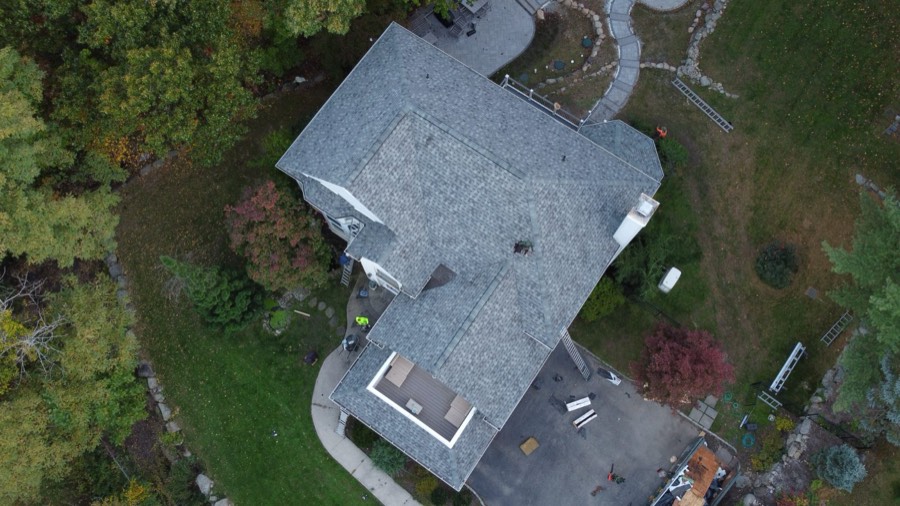
Signs your roof is near the end
- Shingles curling at the edges or cupping in the middle
- Bald patches where the granules have worn off
- A lot of black grit in the gutters or at the bottom of downspouts
- Cracked or missing shingles after ordinary storms
- More than one leak in a couple of years
- Daylight through the roof boards, or dark stains on the attic sheathing
- A sagging ridge or soft spots
One of these on a young roof usually means a repair. Several on a roof over 20 years old usually means it's time to start planning a replacement before the next winter, not after a leak.
How to make a new roof last longer
- Fix the ventilation when you re-roof. A ridge vent with good intake at the soffits is the single best thing for shingle life.
- Tear off to the deck. Don't lay new shingles over old ones.
- Trim back branches that touch or hang over the roof.
- Keep gutters clear, especially in late fall, so water and ice don't back up at the edge.
- Get a quick check after big storms and every few years. Small repairs keep small problems from spreading.
Don't know how old your roof is?
Check your home purchase paperwork or inspection report, or ask a neighbor who's been on the street a while. Roofs on the same street often went on around the same time. If you still can't tell, a roofer can usually estimate the age within a few years just by looking at the shingles.
Need help with this in Fairfield?
We'll take a look and give you a free written quote. Learn more about roof replacement in Fairfield.